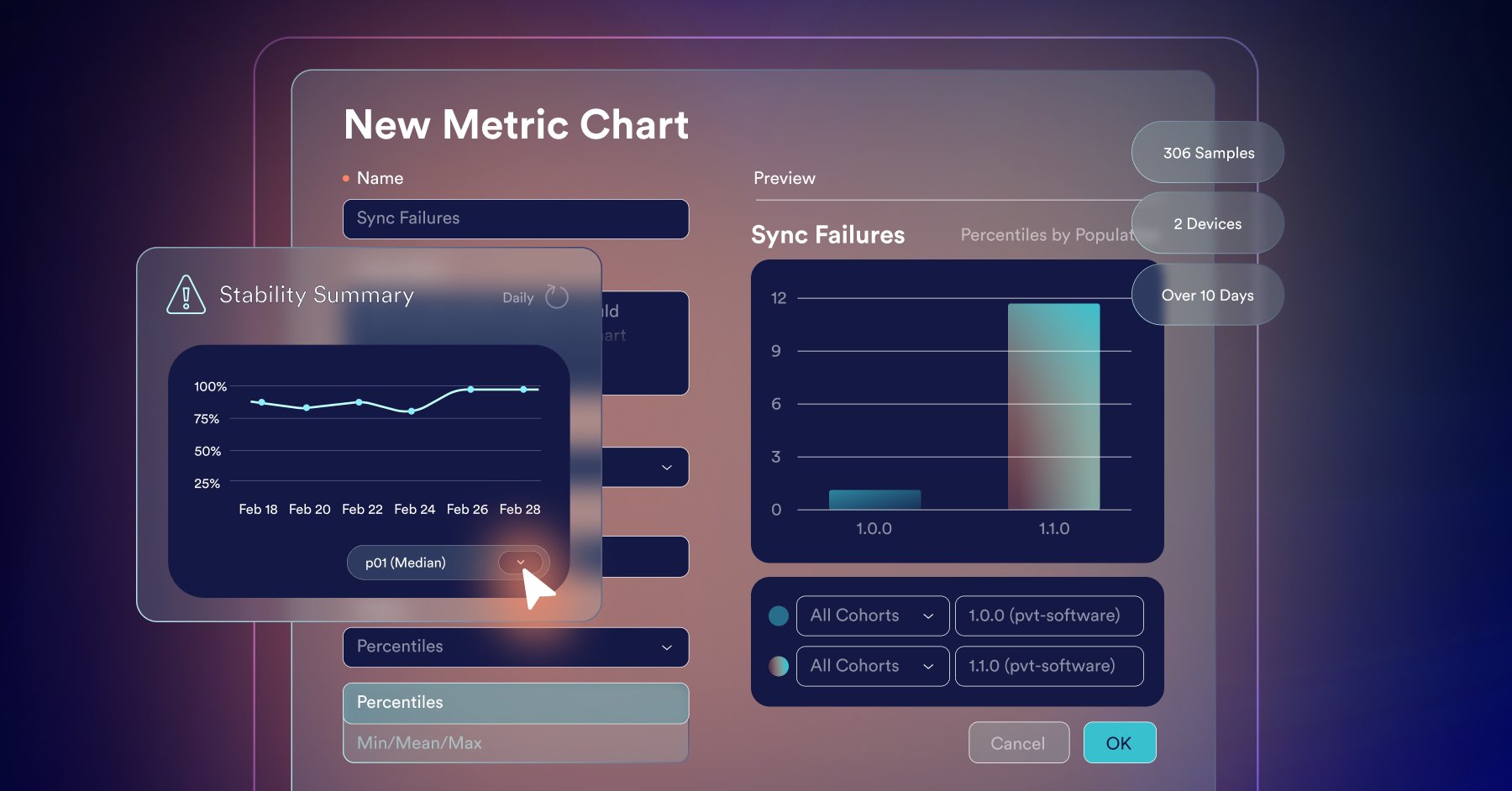
BUSINESS CHALLENGE
Embedded engineering has historically been a “black box.” When a device leaves the factory, developers have almost zero visibility into how it performs in the real world. Memfault set out to change that by providing a cloud-based observability platform for hardware teams.
My specific role on this project was the Founding Designer and UX Lead. I was responsible for establishing the design culture and building a design system that could scale across these disparate personas.
Our challenge was to bridge the gap between “bench testing” and remote debugging. We needed to provide enough technical depth to gain the trust of firmware engineers while maintaining the “shiny” usability executive stakeholders required.
Target Users
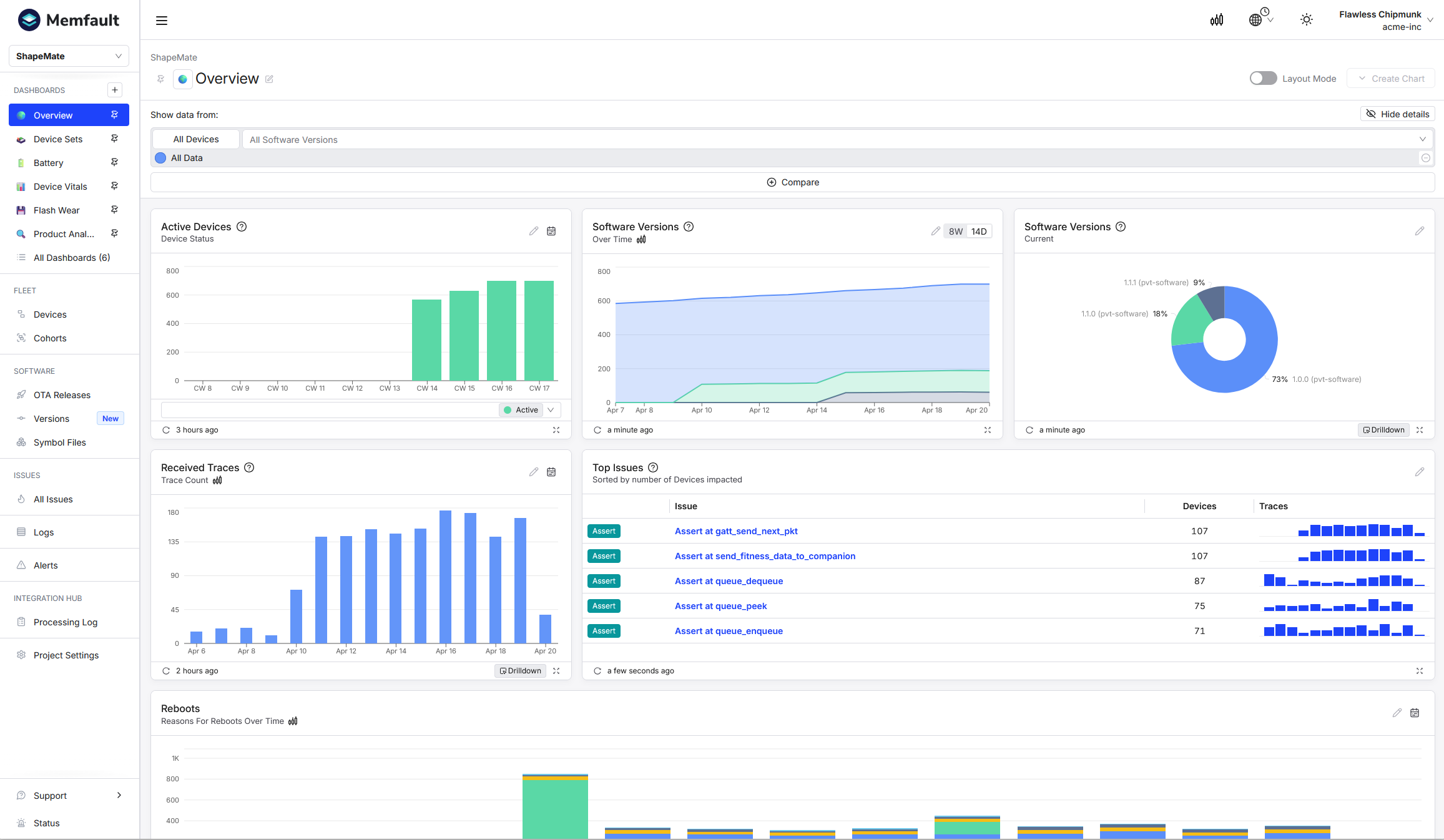
Designing for Memfault meant designing for a wide spectrum of users. On one end were executives who required high-level, high-impact dashboards. In the middle were software engineers accustomed to cloud tooling like Datadog, expecting similar power for their device fleets. On the far end were firmware engineers—a highly technical group traditionally reliant on lab-bench testing.
PROCESS:
At Memfault I focused on deep engagement with the engineering team. Most of the engineering team came from the embeded space, so they had deep understanding of the product space. Picking our target user. Because there are 3 very different personas I had to be clear with engineer, product, and executives about who features were for, and what their goals were. Several features focused on only one or two users, and it is tempting to build for everyone, when you should be building for the user who needs it most.
FLEET-WIDE LOGGING
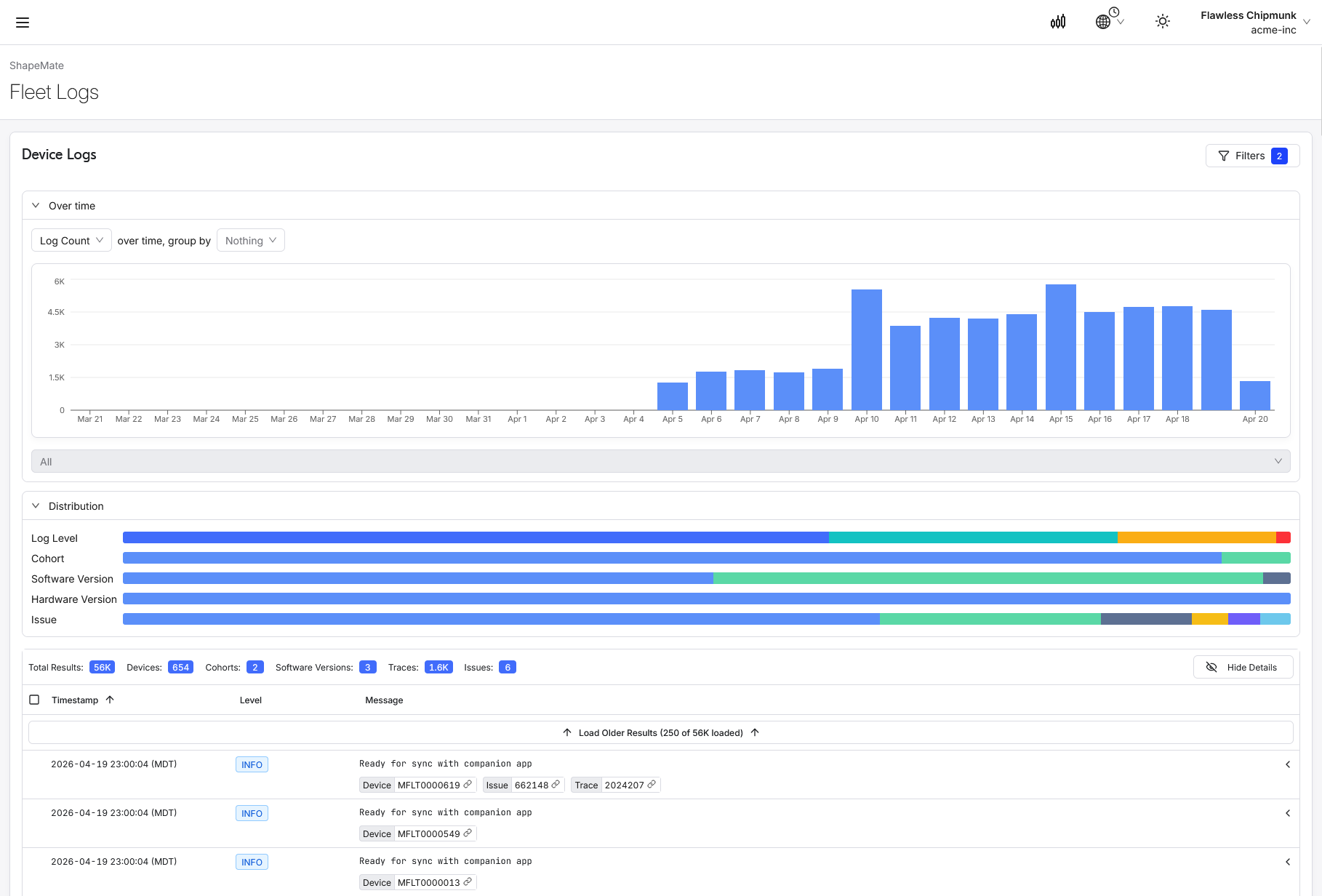
Logging was the “big win” that convinced traditional firmware engineers to embrace remote observability.
By shifting the focus from individual device logs to a “bigger picture” fleet-wide view, we encouraged engineers to move away from isolated lab testing and toward proactive, remote debugging. We compressed complex technical telemetry into intuitive flows that scaled with the needs of the company.
LOGGING PROBLEMS
However, designing “Fleet-Wide Log Search” for millions of devices introduced three major hurdles:
- Intermittent Connectivity: Unlike static servers, devices aren’t always online, meaning data is constantly shifting.
- Signal vs. Noise: Picking out critical errors from thousands of devices dropping real-time logs is an immense UX challenge.
- UI Compression: We had to balance information density across different archetypes—from the high-level overview to the low-level trace.
INTEGRATING AI: PROACTIVE RELEASE INSIGHTS
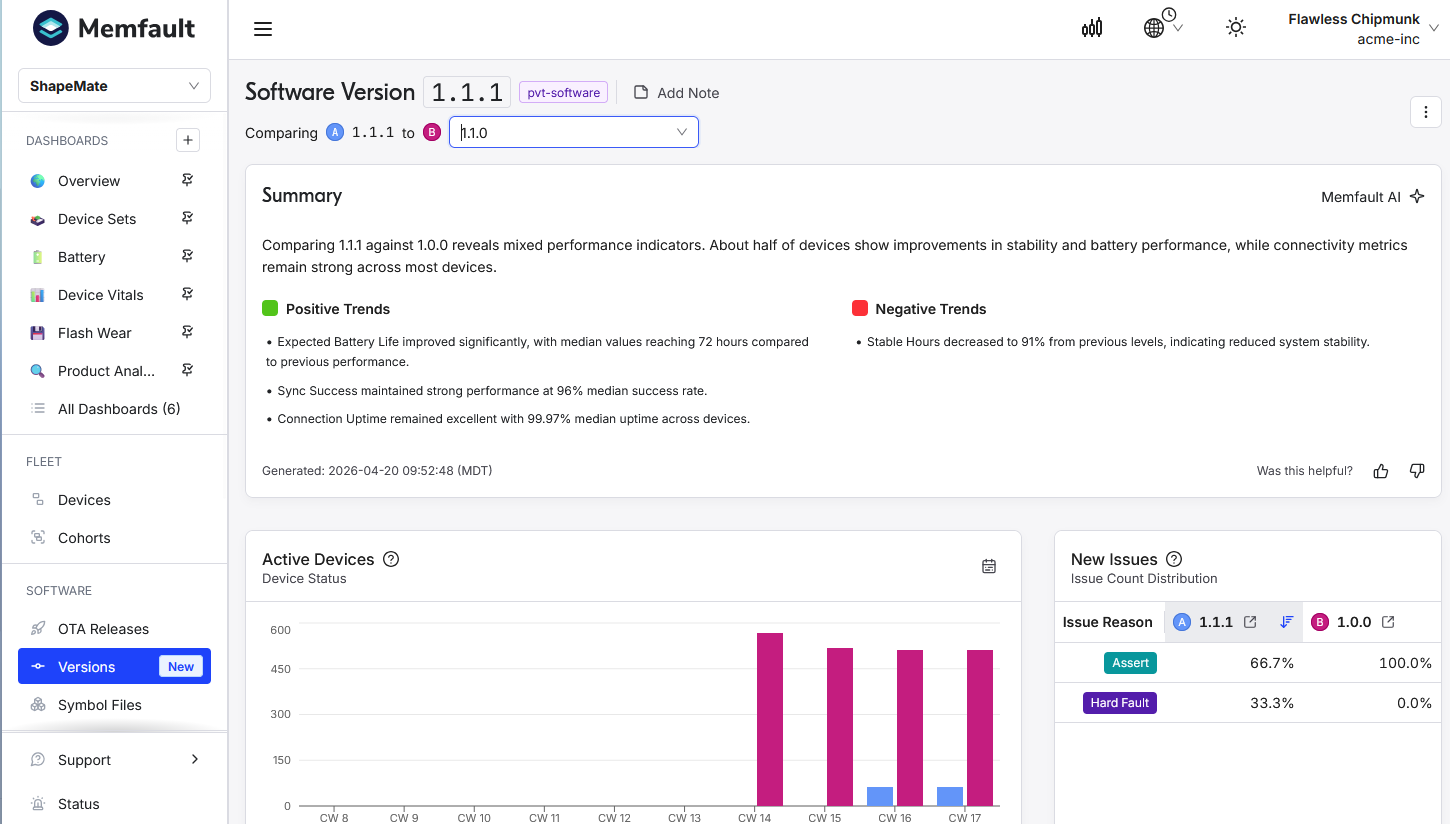
Historically, companies knew a release was successful only when “customer complaints” stayed low. We wanted to move faster than the feedback loop of a support ticket.
We integrated AI into the Proactive Release Dashboard to automatically compare releases. Instead of engineers manually reviewing dashboards, the AI generates reports on health, improvements, and setbacks, providing a readable summary of fleet stability in seconds.
MY IMPACT ON MEMFAULT
As Memfault grew, the design function became a core driver of business value. Our results included:
- Developer Velocity: Built a robust design system that dramatically sped up engineering cycles.
- Sales Enablement: Launched new flagship features like Fleet-Wide Logging that enabled millions in new enterprise sales.
- Churn Reduction: Solved dozens of “sticky” UX problems, creating a smoother experience that significantly decreased customer churn.
My time at Memfault was defined by translating “The Most Technical Product” into a usable interface that not only solved engineering problems but also drove meaningful business growth.